
It has been found that people who suffer from periodontal disease may be more likely to develop dementia later in life. This correlation is believed due largely because gum diseases can wipe out your memory architecture – meaning you no longer have the ability of recall or recognition, which makes navigating through daily tasks extremely difficult for someone suffering from these illnesses.
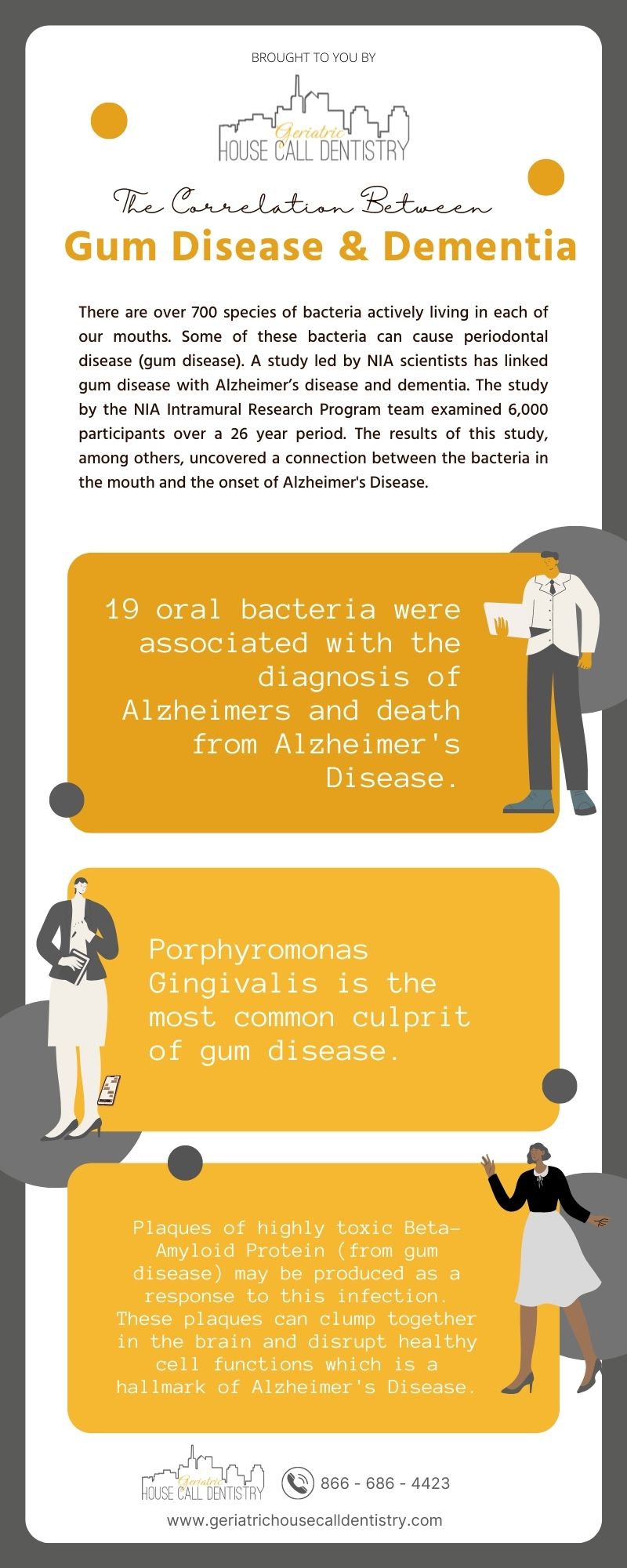
There are over 700 species of bacteria actively living in each of our mouths. Some of these bacteria can cause periodontal disease (gum disease). A study led by NIA scientists has linked gum disease with Alzheimer’s disease and dementia. The study by the NIA Intramural Research Program team examined 6,000 participants over a 26 year period. The results of this study, among others, uncovered a connection between the bacteria in the mouth and the onset of Alzheimer’s Disease.
- 19 oral bacteria were associated with the diagnosis of Alzheimers and death from Alzheimer’s Disease.
- Porphyromonas Gingivalis is the most common culprit of gum disease.
- Plaques of highly toxic Beta-Amyloid Protein (from gum disease) may be produced as a response to this infection. These plaques can clump together in the brain and disrupt healthy cell functions which is a hallmark of Alzheimer’s Disease.
